The Difference Between a Gambler and a Trader — I Was the Gambler for 5 Years
I need to tell you something that most trading educators won’t admit: I was a terrible trader for five years. Not just bad—I was a gambler wearing a trader’s costume. I had the charts open, knew the terminology, even had a subscription to a premium trading service. But underneath all of that, I was doing exactly what someone at a poker table does: betting on outcomes I couldn’t control, chasing the thrill, and lying to myself about the results.
This isn’t a story I’m proud of. I blew trading accounts before I finally understood the difference between gambling and trading. But I’m sharing it because I see the same patterns in new traders every single day, and if this post saves even one person from repeating my mistakes, it’s worth it.
The line between gambling and trading is thinner than you think. And crossing from one side to the other changed everything for me.
Gambler vs. Trader: The Core Differences
Before I tell you my story, let’s be honest about what separates these two mindsets. Because the difference isn’t about what you trade or which broker you use. It’s about what’s happening between your ears.
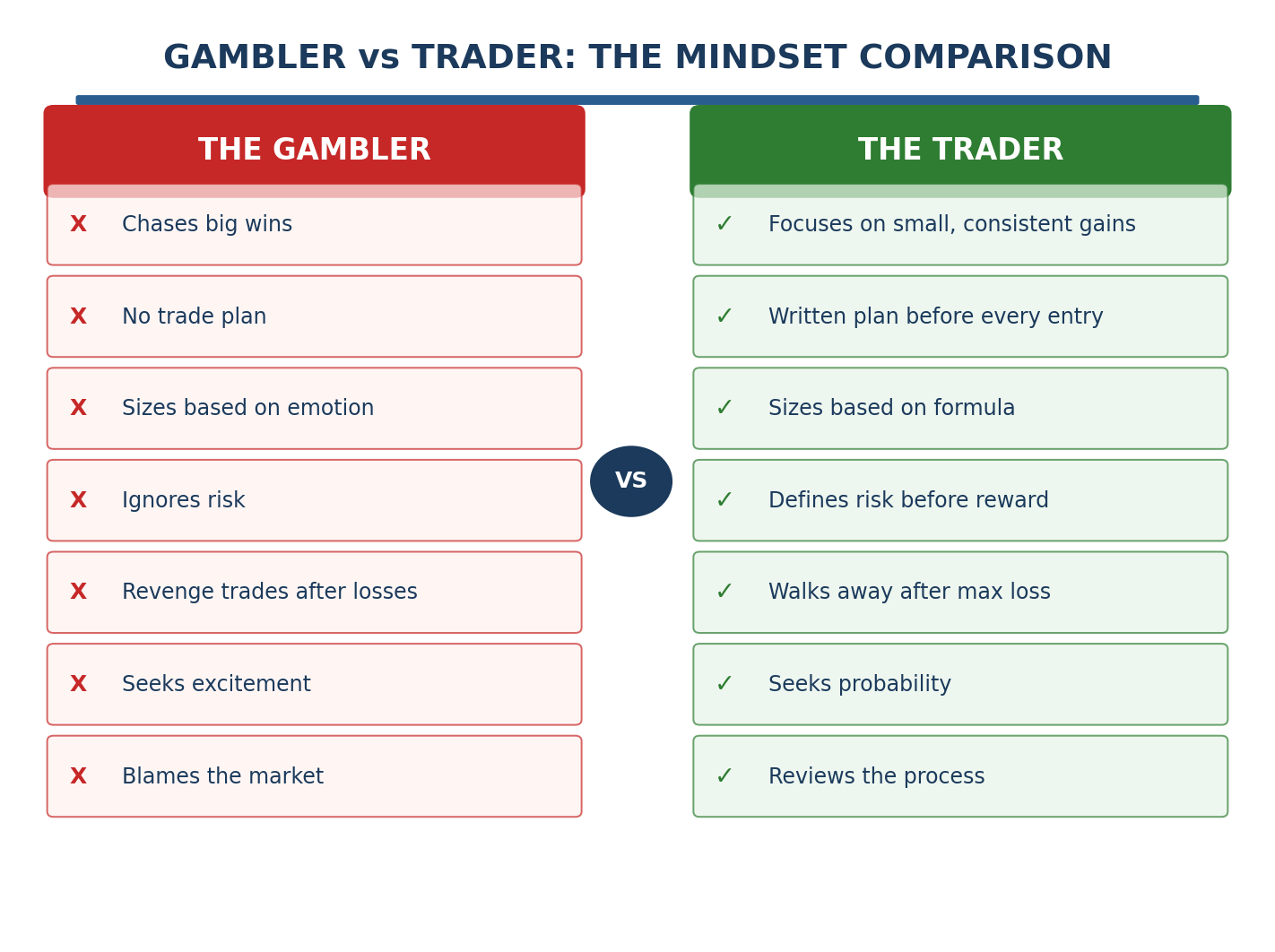
Reading that chart, you might recognize yourself in the left column for some of those rows. That’s okay. Awareness is the first step. I lived in every single row on the left side for five years before I made the shift.
My Five Years as a Gambler
It started the way it starts for a lot of people: a big win.
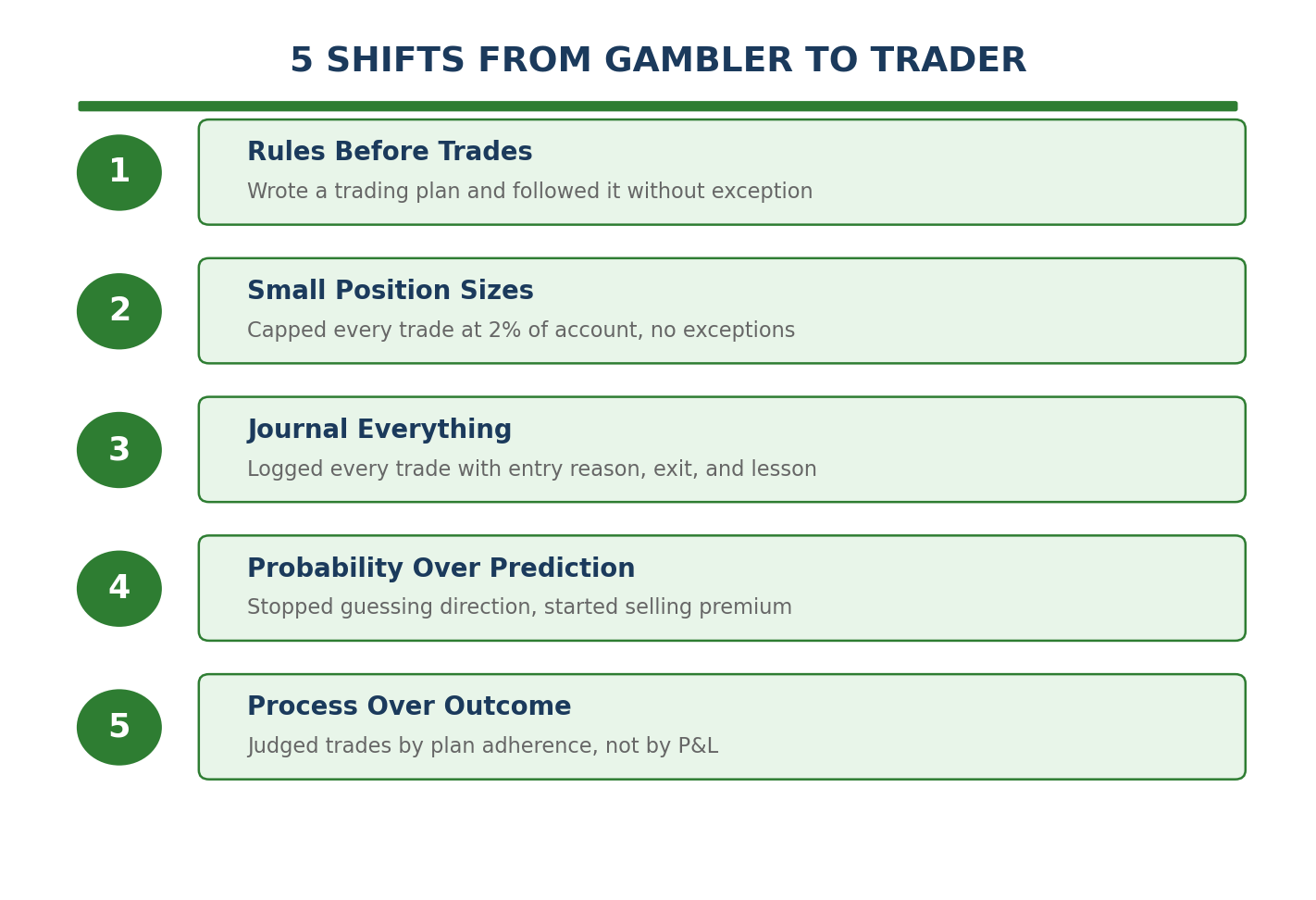
Year one was electric. I discovered options, made a few trades based on tips from a chat room, and turned 8,000 dollars into almost 22,000 in two months. I thought I was a genius. I told my friends. I daydreamed about quitting my job. What I didn’t realize is that I’d gotten lucky during a strong bull market rally, and my “strategy” was just buying calls on whatever was going up.
Year two is when the wheels started wobbling. Convinced I had an edge, I doubled my position sizes. When a trade went against me, I’d add to it—“averaging down” I called it. By summer, I’d given back every penny of profit and then some. I was down 40% from my starting point. But instead of stopping, I deposited more money and kept going.
Year three was the strategy-hopping phase. I bought every course, tried every indicator, switched between day trading, swing trading, scalping, and even briefly tried forex. Each new approach came with a burst of hope followed by the same result: losses. I was looking for the “secret” that didn’t exist.
Year four was the blame phase. The market was rigged. My broker was front-running my orders. The chart patterns didn’t work anymore. I had an excuse for everything. The one thing I never blamed was my own behavior.
Year five was rock bottom. I blew my third account—this time it was money I really couldn’t afford to lose. I sat at my desk staring at a zero balance and finally asked the question I’d been avoiding: “Am I actually trading, or am I just gambling with extra steps?”
The Moment Everything Changed
The turning point wasn’t dramatic. There was no movie-style revelation. I simply got honest with myself and wrote down two lists on a piece of paper.
List one: What a gambler does. List two: What a professional trader does. When I compared my actual behavior to those lists, I wasn’t even close to the trader column. Every single thing I did—from how I chose trades, to how I sized positions, to how I handled losses—was pure gambling behavior dressed up in trading vocabulary.
That honest self-assessment was painful, but it was also the most valuable exercise of my trading career. Because once I identified the problem, I could actually fix it.
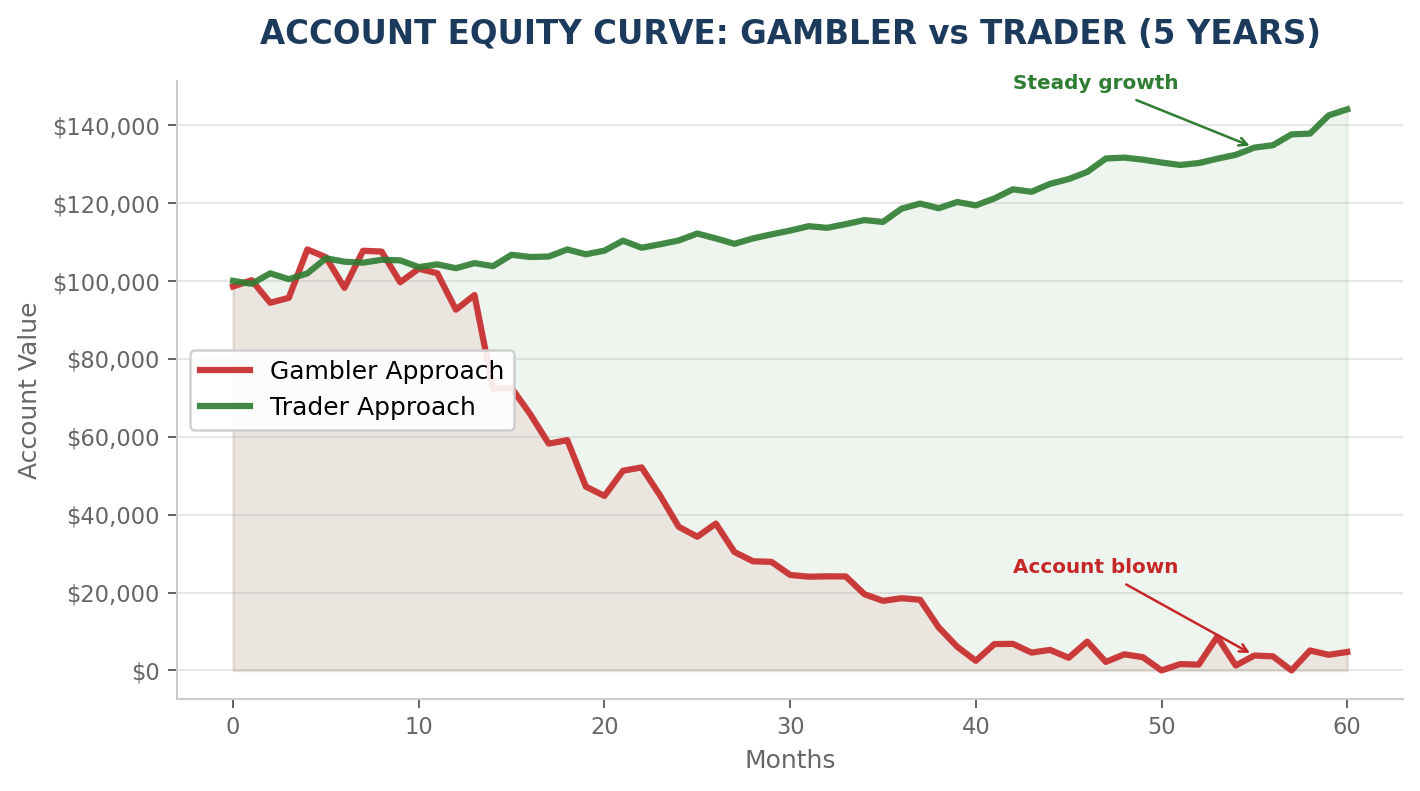
The Five Shifts That Transformed My Trading
Shift 1: Rules Before Trades
I wrote a one-page trading plan that covered what I would trade, when I would trade, how much I would risk, and when I would exit. The critical part: I committed to following it for 30 days without deviation. No exceptions. If a “perfect” trade didn't meet my criteria, I let it go. This single change eliminated 80% of my bad trades.
Shift 2: Small Position Sizes
I capped every position at 2% of my account. After years of putting 15–20% of my capital into single trades, this felt absurdly small. But something remarkable happened: I stopped caring about individual outcomes. When any single trade can’t hurt you, you make better decisions. Fear and greed have less to grip.
Shift 3: Journal Everything
I started logging every trade: the entry reason, the exit reason, what I felt during the trade, and what I learned. Within three months, patterns emerged that I’d been blind to for five years. I discovered that my worst trades all happened on Monday mornings (I was impulsive after the weekend) and after losing days (revenge trading). Without data, I would have never seen this.
Shift 4: Probability Over Prediction
This was the biggest philosophical shift. I stopped trying to predict where the market was going and started selling options premium—putting probability on my side. When you sell an iron condor with a 70% probability of profit, you don’t need to know which direction the market will move. You just need it to stay within a range. That’s trading, not gambling.
Shift 5: Process Over Outcome
I stopped judging trades by whether they made money. Instead, I judged them by whether I followed my plan. A losing trade that was executed perfectly was a good trade. A winning trade where I broke my rules was a bad trade. This reframing eliminated the emotional rollercoaster. My mood stopped being tied to my P&L, and my decision-making improved dramatically.
What Happened When I Stopped Gambling
The results weren’t instant. The first three months of trading “properly” were actually boring. No big wins, no exciting stories to tell friends. Just small, consistent trades. But at the end of those three months, something hit me: for the first time in five years, my account was green.
Not massively green. Not retirement money. Just steadily, quietly positive. And it kept going.
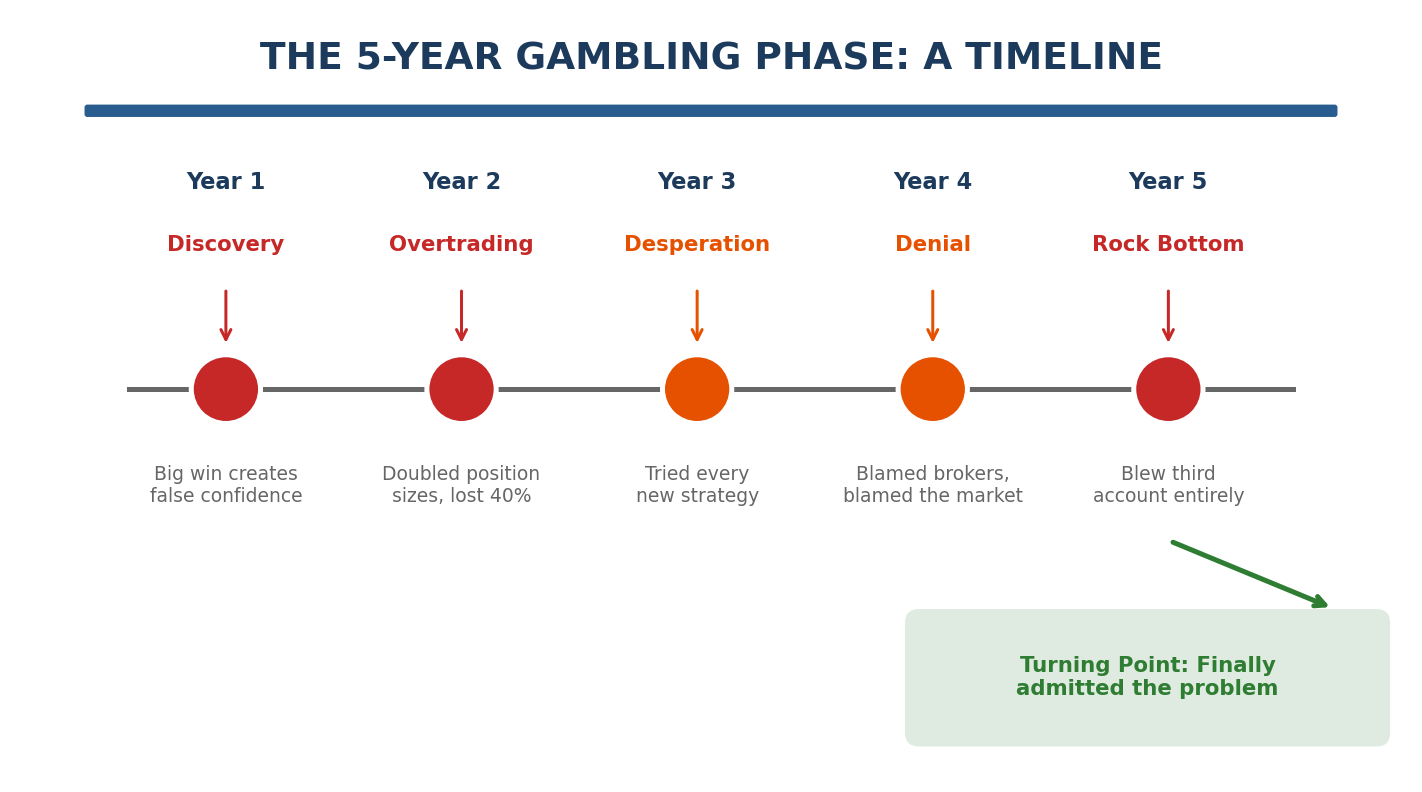
The equity curve above isn’t from my actual account, but it’s a faithful representation of the pattern. The gambler curve has big spikes (those exciting wins I used to chase) but trends relentlessly downward. The trader curve looks boring by comparison—but it compounds. Month after month, the steady approach builds wealth while the exciting approach destroys it.
How to Know If You’re Still Gambling
Be honest with yourself as you read these. If three or more apply to you, it’s time for a mindset reset:
You check your P&L more than 10 times a day.
You’ve ever said “this trade feels right” without having quantifiable criteria.
Your position sizes change based on how confident you feel, not on a formula.
You’ve ever increased size after a losing streak to “make it back.”
You don’t keep a trading journal.
You can’t explain your edge in one sentence.
The emotional high of a winning trade is the main reason you trade.
I’m not listing these to shame anyone. I checked every single box on that list for five years. The point is recognition—once you see the pattern, you can break it.
Stop Guessing the Market.
Start Trading With Math.
Our methodology is built on statistics and probabilities — not hype, emotion, or market gurus. Get your first 5 strategy courses completely free and start building real, consistent results.
Key Takeaways
The line between gambling and trading is about behavior, not instruments. You can gamble with options, stocks, or crypto. You can trade all of them professionally. The vehicle doesn’t matter; the mindset does.
Big wins early on are dangerous. They create false confidence and train you to seek excitement instead of edge.
The five shifts (rules, sizing, journaling, probability, process) are sequential. Start with rules and sizing. The rest follows naturally.
Boring is profitable. If your trading is exciting, you’re probably gambling. Professional trading is methodical, repetitive, and emotionally flat.
It’s never too late to make the shift. I wasted five years and multiple accounts. But the principles work regardless of where you’re starting from.
Next Steps
If you recognized yourself in this story, you’re exactly where I was. The good news is that making the shift doesn’t require more money, a better broker, or a secret strategy. It requires honesty, a plan, and discipline.
At Navigation Trading, we’ve helped over 40,000 students make this exact transition—from guessing to systematic, probability-based trading. Our community, education library, and live trade alerts are designed around the same principles that pulled me out of five years of gambling. If you’re ready to stop gambling and start trading, we’d love to have you.
Disclaimer: Options involve risk and are not suitable for all investors. This article is based on personal experience and is for educational purposes only. It does not constitute personalized financial advice. Past performance does not guarantee future results.